
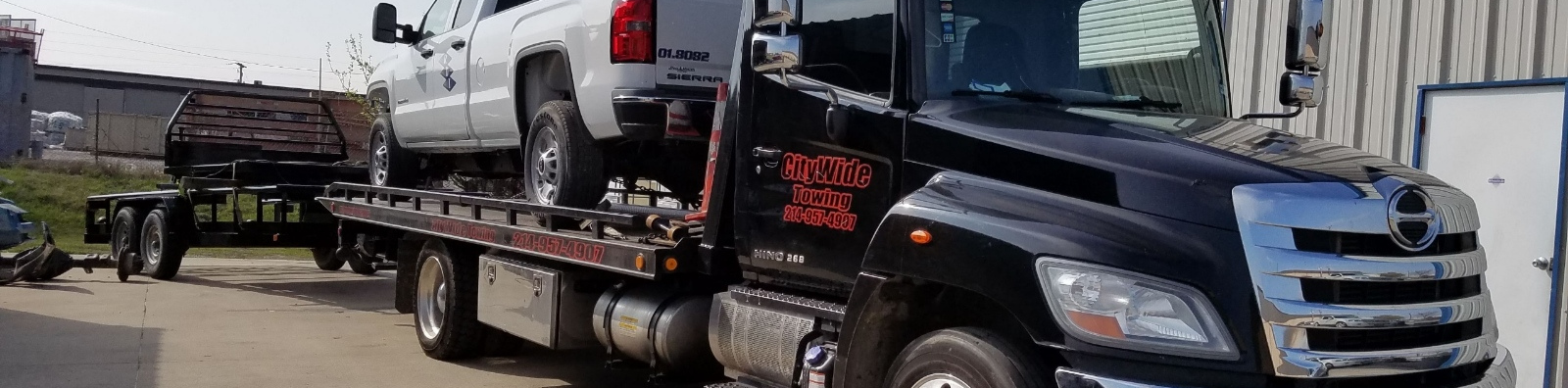
When a vehicle breaks down or needs to be transported, choosing the right towing method helps prevent damage and ensures a smooth recovery. Two of the most common and reliable towing options are flatbed towing and wheel-lift towing. Each serves a specific purpose depending on the vehicle type, location, and situation. Understanding how these towing services work can help drivers make informed decisions when they need roadside assistance. With this in mind, we at Citywide Towing Service would like to discuss these 2 towing options briefly.
How Flatbed Towing Works
Flatbed towing uses a truck equipped with a long, level platform that can be hydraulically lowered to the ground. The vehicle is either driven or winched onto the flatbed, then secured with straps or chains at all four corners. Once loaded, the entire vehicle is lifted off the road and transported safely to its destination.
This method is widely considered the safest towing option because none of the vehicle’s wheels remain in contact with the road. Flatbed towing is especially beneficial for all-wheel-drive vehicles, luxury cars, electric vehicles, classic cars, and vehicles with low ground clearance. It also eliminates concerns about drivetrain damage, uneven tire wear, or transmission issues during transport.
Benefits & Uses of Flatbed Towing
Flatbed towing provides maximum vehicle protection and stability. Because the vehicle remains stationary during transport, there is minimal risk of shifting or dragging. This makes flatbed towing ideal for long-distance transport, accident recovery, and situations where a vehicle cannot roll due to damage.
Flatbeds are also commonly used when a vehicle has been in a collision, has severe mechanical failure, or is unsafe to tow using traditional methods. For drivers who prioritize safety and vehicle preservation, flatbed towing is often the preferred choice.
How Wheel-Lift Towing Works
Wheel-lift towing is a more modern alternative to traditional hook-and-chain towing. It uses a hydraulic metal yoke placed under either the front or rear wheels of the vehicle. Those wheels are lifted off the ground, while the remaining wheels stay on the road during transport.
This towing method allows for faster hookups and is particularly effective in tight spaces, such as parking lots, alleys, or residential streets. Wheel-lift towing is commonly used for short-distance tows, disabled vehicles, and roadside breakdowns.
Benefits & Uses of Wheel-Lift Towing
Wheel-lift towing is efficient, versatile, and less intrusive than older towing methods. Because it lifts the vehicle by its tires rather than the frame, it reduces the risk of body damage. Wheel-lift trucks are also more maneuverable, making them ideal for urban environments and quick recoveries.
This method works well for front-wheel-drive and rear-wheel-drive vehicles when used correctly. In some cases, dollies may be added to lift all wheels off the road, providing additional protection during transport.
Choosing the Right Towing Method
Both flatbed towing and wheel-lift towing play important roles in professional towing services. The best option depends on the vehicle type, condition, and location. A professional towing company will assess the situation and recommend the safest, most efficient method to get your vehicle where it needs to go, without unnecessary risk or damage.
Towing Service, Roadside Assistance & More in Addison, Balch Springs, Carrollton, Cedar Hill, Cockrell Hill, Combine, Coppell, DeSoto, Farmers Branch, Ferris, Garland, Glenn Heights, Grapevine, Highland Park, Hutchins, Lancaster, Lewisville, Ovilla, Richardson, Rowlett, Sachse, Seagoville, Sunnyvale, University Park, Wilmer, Wylie, Duncanville, Grand Prairie, Arlington, Irving, Mesquite & Greater Dallas, Texas
If you find you need a towing services in the Greater Dallas, TX area, contact Citywide Towing Service today!
